
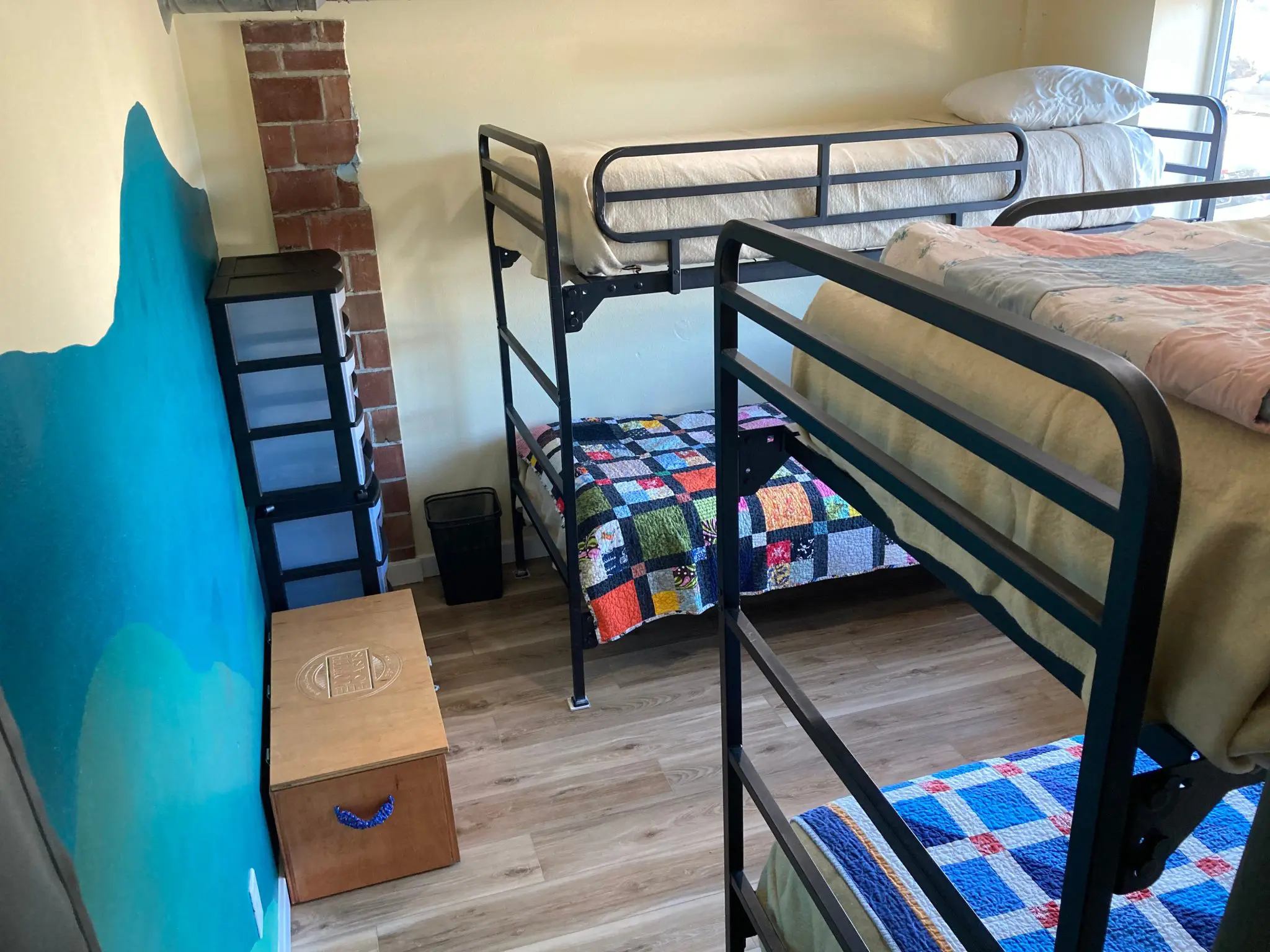
We often get asked: What does it mean to be a low-barrier shelter?
A low-barrier shelter simplifies the intake process for emergency housing. Unlike many shelters, it doesn’t require identification, a lengthy application, or sobriety.
Choosing to be a low-barrier shelter is our solution to ensure unhoused youth are not turned away. The focus of The Coffee Oasis is to meet youth where they are and provide support around identified goals, including mental health and substance abuse support, employment, school success, and long-term housing solutions.
One youth shared:
“The Coffee Oasis helps a lot of people who are overlooked usually. I’ve worked at a shelter, and while I was working there, we wouldn’t even let people in who didn’t an I.D. So I’ve seen minors get turned away, like young girls how I was, and they’ve been put in really dangerous situations like having to sleep on the streets because most shelters won’t house minors.” – Amara, youth
Low-barrier shelters offer more flexibility and autonomy for youth.
Traditional shelters often have strict policies that can result in losing a shelter residency after missing one night. Low-barrier models often allow 3-5 missed days before discharging a person.
This approach helps youth remain housed longer, while still making space available for others who need it. More flexible curfews also support steady employment, ability to maintain relationships, and participation in meaningful, healthy activities.
Low-barrier shelters do not compromise safety.
Weapons are not allowed on shelter premises, shelter staff are trained in de-escalation, and substances are not allowed onsite. Shelter staff utilize a no-touch search to ensure weapons or drugs do not make their way onto the property to ensure the safety of youth and staff. Low-barrier shelters do allow individuals who are under the influence. The goal of this is not to encourage substance use, but to meet youth where they’re at and begin building positive relationships that lead to life transformation.
For the safety of shelter residents, overdose response training and prevention supplies are available. Response training and education is offered to shelter residents and youth visiting the drop-in centers such as classes in alcohol and fentanyl awareness, overdose awareness, and narcan training. Safety checks and monitoring are implemented as standard practice for all residents to monitor safety. Additionally, Crisis Navigators are available for youth experiencing suicidal thoughts or in need of long-term chemical dependency support services.
The Coffee Oasis provides youth with long-term support.
The goal of staying at a low-barrier shelter is to prepare youth for long-term success by offering wraparound services.
Unlike a typical 30-day stay at a traditional shelter, The Coffee Oasis allows youth to stay for up to 150-days. This extended stay provides more time for youth to have their basic needs met and offers the key foundation of safety and stability before focusing on long-term goals. Youth work with Case Managers to address short-term barriers and work toward achieving long-term goals.
Some of these goals may include obtaining identification documents, job training and employment support, transportation, long-term housing support, family reconciliation, accessing benefits (SNAP, SSI/SSDI, VA benefits, TANF), integrated health care, reducing harm related to substance abuse, support building healthy relationships, and behavioral health services.
“It’s not just another one of those shelters that I’ve been to where they really only house you. Other shelters don’t provide any of that support the youth need. We need more shelters like this (The Coffee Oasis). They’ve provided a lot of comfort, and they’ve provided the support I don’t have from my family. To have the staff by my side is super amazing.” – Heather, youth
The mission of The Coffee Oasis is to restore community through compassionate youth programs and coffee businesses. Through our shelter programs, we are able to serve youth who would often be prohibited from receiving services. We seek to build longer tables instead of taller fences to answer the call of Jesus to serve the poor, marginalized, outcast, oppressed, and overlooked.
To learn more about the impact of youth programs, join our mailing list.

Creating opportunities for youth to thrive.
January – October 2025:




Leave A Comment